
Things To Consider When Installing Solar LED Street Lights
Choosing the Right Solar Street Lights – Complete UK Buyer’s Guide
Introduction
Choosing the right solar street lighting system is about far more than simply selecting the brightest light. Every installation is different, and factors such as mounting height, lighting levels, battery capacity, operating hours and installation location all influence which system will provide the best long-term performance.
Whether you’re lighting a commercial car park, farm, industrial estate, school, holiday park or remote pathway, careful planning helps ensure reliable year-round illumination while keeping installation and maintenance costs to a minimum.
At Dragons Breath Solar, we’ve been designing and supplying bespoke solar street lighting systems throughout the UK for over 20 years. Our own Dragon range has been developed specifically for UK weather conditions, providing dependable off-grid lighting solutions for commercial, agricultural and domestic applications. Browse our complete range of Solar Street Lights to find the right solution for your project.
This guide explains the most important factors to consider before investing in a solar street lighting system.
Contents
- Why Choose Solar Street Lighting
- Selecting the Right Location
- How Many Solar Street Lights Do You Need
- Choosing Between All-in-One and Two-Part Systems
- Selecting the Correct Lighting Output
- Battery Capacity and Operating Hours
- Mounting Height and Light Distribution
- Solar Panel Position and Shading
- Local Planning and Installation Requirements
- Maintenance and Long-Term Reliability
- Frequently Asked Questions
Why Choose Solar Street Lighting
Modern solar street lighting offers an efficient alternative to traditional mains-powered lighting by eliminating the need for trenching, underground cabling and ongoing electricity costs. If you’re new to off-grid lighting, visit our Solar Street Lighting Guides for more buying advice and installation information.
Benefits include:
- No mains electrical connection required
- Lower installation costs
- Reduced running costs
- Environmentally friendly operation
- Reliable year-round lighting
- Minimal maintenance
- Suitable for remote locations
Read our How Commercial Solar Lighting Can Benefit Your Business guide.
Selecting the Right Location
Every installation begins with understanding where the lighting will be used.
Typical applications include:
- Commercial premises
- Car parks
- Industrial estates
- Farms
- Schools
- Holiday parks
- Public footpaths
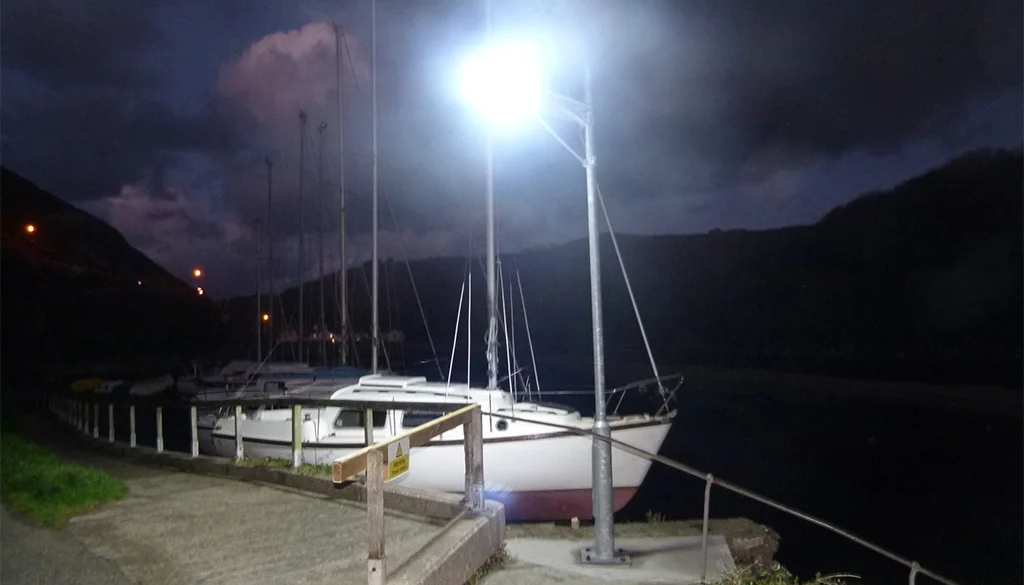
- Marinas
- Housing developments
- Retail parks
- Distribution centres
- Campsites
- Sports facilities
The installation location influences the lighting level, mounting height and battery capacity required.
How Many Solar Street Lights Do You Need
The number of lights depends upon:
- Area to be illuminated
- Pole spacing
- Mounting height
- Required light levels
- Beam angle
- Application
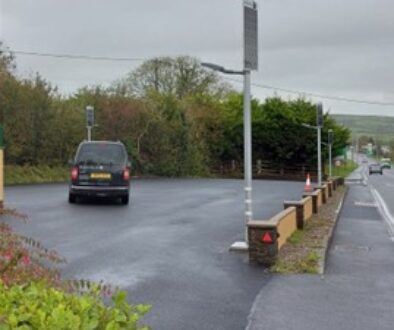
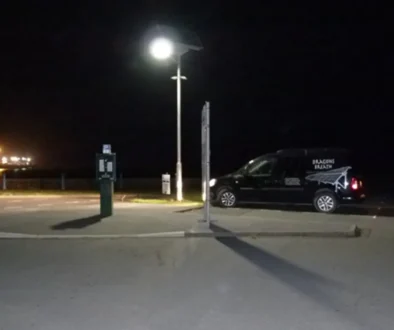
A small pathway may only require a few strategically positioned lights, while a commercial car park could require multiple lighting columns to achieve consistent illumination.
Choosing Between All-in-One and Two-Part Systems
There are two common types of solar street lighting.
All-in-One Solar Street Lights
These compact units combine the solar panel, battery and LED light into one integrated fitting.
Ideal for:
- Pathways
- Parks
- Smaller car parks
- Domestic applications
Two-Part Solar Street Lights
These systems position the solar panel separately from the light fitting.
Advantages include:
- Greater flexibility
- Better solar orientation
- Higher power output
- Suitable for larger commercial projects
Selecting the Correct Lighting Output
Choosing the correct light output is just as important as selecting the correct product.
Consider:
- Width of the area
- Mounting height
- Required brightness
- Uniform light coverage
- Security requirements
Larger commercial installations often benefit from our range of Hybrid Solar Street Lights, while smaller applications may be better suited to All-in-One or Two-Part Solar Street Lights, depending on the lighting requirements.
Installing a larger light than necessary can increase costs unnecessarily, while undersized lighting may fail to provide adequate illumination.
Battery Capacity and Operating Hours
Battery capacity determines how long the light can operate without sufficient sunlight.
Consider:
- Winter performance
- Number of consecutive cloudy days
- Dusk-to-dawn operation
- Motion sensor operation
- Lighting schedules
Modern LiFePO₄ batteries offer long service life, excellent reliability and low maintenance.
Mounting Height and Light Distribution
The mounting height affects both the spread and intensity of light.
Selecting the correct pole height helps reduce dark spots, improve safety and maximise light distribution. We also supply a range of Street Light Columns designed to complement our solar lighting systems.
- Reduce dark spots
- Improve safety
- Maximise efficiency
- Minimise the number of fittings required
Solar Panel Position and Shading
Solar panels should receive as much daylight as possible.
Avoid:
- Trees
- Buildings
- Chimneys
- Other obstructions
Good solar exposure allows batteries to recharge efficiently throughout the year.
Local Planning and Installation Requirements
Before installation, check whether your project requires any specific approvals or planning considerations.
Depending on the installation, you may need to consider:
- Local planning requirements
- Pole height restrictions
- Highway authority requirements
- Commercial site regulations
Large commercial projects may have additional design requirements.
Maintenance and Long-Term Reliability
Modern solar street lights require very little routine maintenance.
Replacement batteries, controllers and components are available through our Solar Street Light Spares range.
Periodic checks should include:
- Cleaning solar panels where necessary
- Inspecting fixings
- Checking battery performance
- Inspecting LED operation
- Removing debris or vegetation that may cause shading
Selecting quality components from the outset generally reduces long-term maintenance costs.
Frequently Asked Questions
Are solar street lights suitable for UK weather
Yes. Modern systems are designed to operate throughout the year when correctly specified.
Do solar street lights work during winter
Yes. Although winter sunlight is lower, correctly designed systems continue operating by combining efficient solar charging with battery storage.
How long do solar street light batteries last
Most modern LiFePO₄ batteries provide many years of reliable service under normal operating conditions.
Can solar street lights replace mains-powered lighting?
In many applications, yes. The most suitable solution depends on the location, lighting requirements and operating hours.
Why Choose Dragons Breath Solar
For more than 20 years, Dragons Breath Solar has supplied bespoke solar street lighting systems throughout the UK.
Our Dragon range has been developed specifically for UK conditions and includes:
- Solar Street Lights
- All-in-One Solar Street Lights
- Two-Part Solar Street Lights
- Hybrid Solar Street Lights
- Solar Car Park Lights
- Street Light Columns
- Solar Street Light Spares
Although we don’t provide installation services, we’re always happy to help customers choose compatible products for commercial, agricultural and domestic projects.
Continue Reading
If you’re researching solar street lighting, these guides may also help:
- Solar Street Lighting Guides – Browse our complete street lighting knowledge hub.
- How Commercial Solar Lighting Can Benefit Your Business – Discover the advantages of commercial solar lighting.
- Solar Street Light Questions & Answers – Answers to the most common customer questions.
- Solar Bollard Lighting Systems – Low-level lighting solutions for pathways and public spaces.
- Complete Guide to Solar Street Lighting in the UK (coming soon).